
Time to Read 3 min
Modified

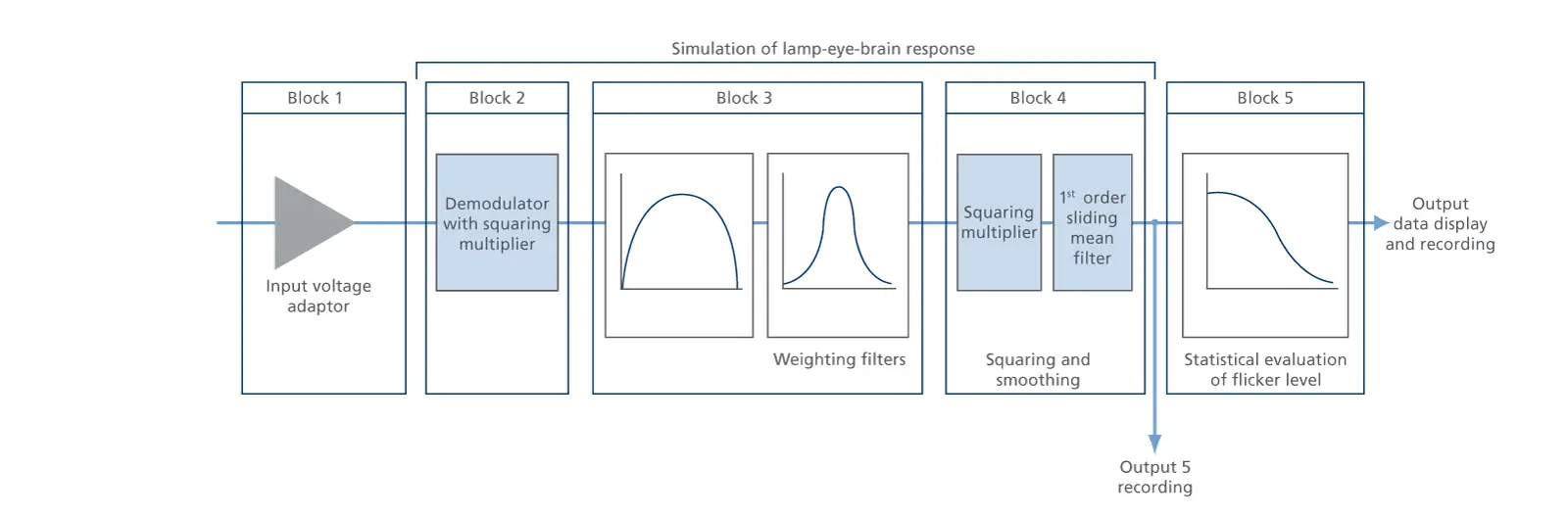
This page briefly introduces you to the flicker problems, describes how flicker occurs and how it is measured. Additionally, it contains some information about the operating condition of the specimen during the measurement and some approximation formulas for estimating the test results.
Last but not least, you get some simple rules for the design of loads and their effects on flicker values.
How does the Operating Condition of the EUT Influence the Flicker Measurement?
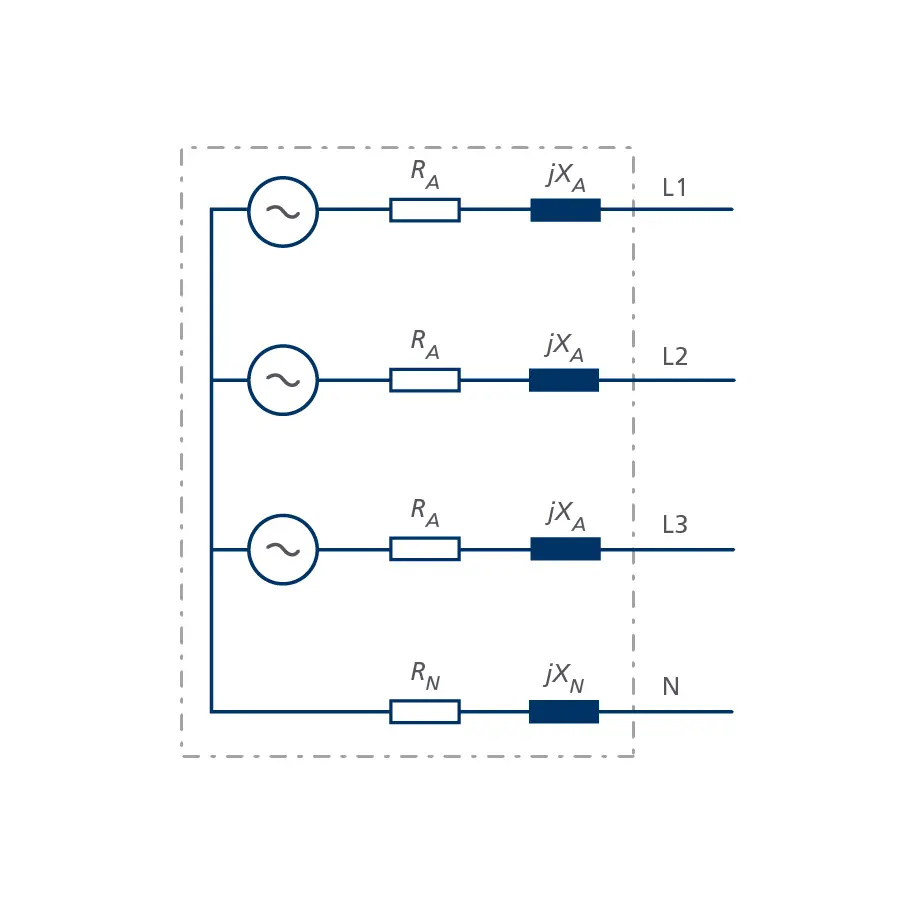
The flicker standard states that the EUT (Equipment Under Test) has to be operated during the test in a way which is the worst case state with respect to flicker.
If the EUT is operated in a (relatively) constant fashion during the whole test, Plt = Pst will result. If this state is is feasible and realistic this means Pst has to fulfill the limits for Plt (which are lower!)
How can the Flicker Quantity Pst be Coarsely Estimated?
A purely analytical calculation of Pst is almost impossible, so we have developed FlickerSim and made it available open-source.
However, formulas for the first estimation of the expected Pst values are given in the standard [2]:
n = number of load changes in the observation interval
Tp = duration of the observation interval in seconds
F = shape factor (1 for step-wise voltage changes)
d = relative voltage change relative dU / U
In [2] there are also shape factors for different curve forms.

Flicker Facts: How are Load Changes and Pst Related?
- Flicker is generated by load changes. Only the amplitude of the load change is relevant, not the absolute value.
- A reduction in Pst can only be attained through:
- less load changes n
- smaller load changes dP
- soft (F < 1) instead of hard (F = 1) load changes (e.g. by the help of power electronics)
- The relationship between amplitude of load changes and Pst is linear, i.e. halving the switched load results in half the Pst
- The relationship between number of load changes per time (n/ Tp) and Pst is non-linear. A halving of load changes reduces Pst by only about 20%. In order to have half the Pst, the number of load changes must be reduced by a factor of 9!
Flicker is one of the most underestimated areas of EMC, especially since flicker can affect the entire system, i.e. both hardware and software.
We develop electronics and systems with flicker in mind from the very beginning.
Patrik Jourdan
Do you have additional questions? Do you have a different opinion? If so, email me or comment your thoughts below!
References
| [1] | IEC 61000-4-15, Testing and measurement techniques – Flickermeter – Functional and design specifications, Edition 1.1, 2003-03 |
| [2] | IEC 61000-3-3, Limits – Limitation of voltage changes, voltage fluctuations and flicker in public low-voltage supply systems, for equipment with rated current 16 A per phase and not subject to conditional connection, Edition 2.0, 2008-06 |
| [3] | Wikipedia: Flicker |
| [4] | Wilhelm Mombauer: „Messung von Spannungsschwankungen und Flickern mit dem IEC-Flickermeter”, ISBN 3-8007-2525-8, VDE-Verlag |

No Comments